
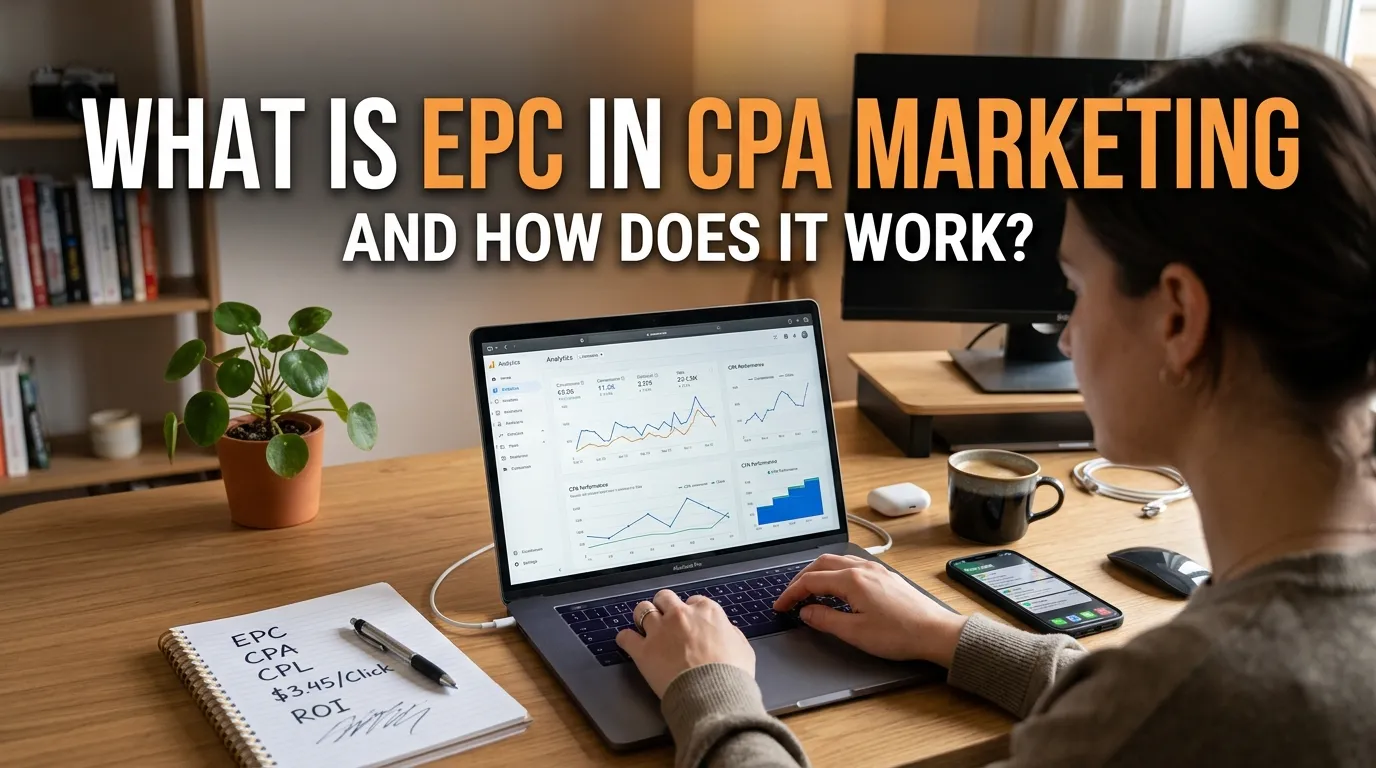
This article explores the core concepts of Earnings Per Click within the Cost Per Action (CPA) marketing landscape. You will learn the exact formula for calculating EPC, why it outperforms basic metrics like CPC (Cost Per Click), and how to interpret network averages. Furthermore, we provide actionable strategies to improve your EPC, a clear comparison of related metrics, expert tips to scale your campaigns, and a breakdown of common mistakes to avoid. By the end of this guide, you will have a deep understanding of what is EPC in CPA marketing and the tools needed to optimize your affiliate revenue.
If you want to thrive in performance marketing, understanding your metrics is non-negotiable. Have you ever wondered what is EPC in CPA marketing and why top affiliates obsess over it? Earnings Per Click (EPC) is the ultimate compass for navigating your campaigns, revealing exactly how much value every click brings to your bottom line. In this comprehensive guide, we will break down what EPC means, how it works, and how you can leverage it to maximize your profits. Let’s dive into the mechanics of EPC and discover how to transform your clicks into consistent cash flow.
Decoding the Mechanics: What is EPC in CPA Marketing?
To truly grasp what is EPC in CPA marketing, we first need to define the term. EPC stands for Earnings Per Click. It is a performance metric that calculates the average amount of money you earn each time a user clicks on your affiliate link.
In CPA marketing, you get paid when a user completes a specific action—like signing up for a newsletter, downloading an app, or making a purchase. While you are paid per action, knowing your earnings per click allows you to measure the efficiency of your traffic sources. If you know exactly how much a click is worth, you can safely determine how much you are willing to spend to acquire that click.
For many, the question arises: What is EPC in CPA Marketing, and how does it compare to other affiliate metrics? The key is that EPC distills the relationship between clicks and earnings into a single, actionable figure. This clarity is why so many successful marketers focus their optimization efforts around boosting their EPC.
Why EPC is the Holy Grail of Affiliate Metrics
Many beginners focus entirely on the payout amount of a CPA offer. However, a high payout does not guarantee profitability if the offer has a terrible conversion rate. That’s why the concept of what is EPC in CPA marketing changes the game for savvy affiliates.
Understanding what is EPC in CPA marketing shifts your focus from the payout to the actual profitability of an offer. It helps you answer the most critical question in media buying: Are my ad campaigns actually making money? When your EPC is higher than your CPC, you are running a profitable campaign. This makes EPC the “north star” metric for all performance marketers.
A solid grasp on what is EPC in CPA marketing can mean the difference between running at a loss or scaling profitable campaigns. By measuring EPC diligently, you can quickly identify winners and losers within your affiliate strategy.
How is EPC Calculated?
The formula for calculating EPC is straightforward and is a core part of answering what is EPC in CPA marketing:
EPC = Total Earnings / Total Clicks
Let’s look at a practical example. Suppose you run a campaign promoting a financial software tool. You generate 1,000 clicks on your affiliate link, and those clicks result in 20 conversions. If the CPA payout is $50 per conversion, your total earnings are $1,000.
Using the formula:
$1,000 (Total Earnings) / 1,000 (Total Clicks) = $1.00 EPC.
This means that, on average, every single click you drive to that offer is worth $1.00. If you are buying traffic, you now know that as long as your CPC is under $1.00, you are generating a profit. This calculation is the foundation for fully understanding what is EPC in CPA marketing and why it’s so essential for your decision-making.
EPC can also be useful for comparing the results of various offers, landing pages, or ad sets. By tracking what is EPC in CPA marketing scenarios, you’ll immediately spot the highest-value sources.
Network EPC vs. Personal EPC
When you log into a CPA network, you will often see an EPC value listed next to each offer. It is crucial to understand the difference between Network EPC and your Personal EPC. This distinction often gets lost, but it’s central to truly understanding what is EPC in CPA marketing.
Understanding Network EPC
Network EPC is the average Earnings Per Click generated by all affiliates promoting that specific offer across the entire network. It serves as a general health indicator for the offer. A high Network EPC suggests that the offer converts well for most affiliates. However, because it averages the results of both top-tier media buyers and complete beginners, it can sometimes be misleading.
Network EPC is often prominently displayed so affiliates can quickly gauge which offers appear strong network-wide, making it one of the most-consulted data points when determining what is EPC in CPA marketing for an offer you haven’t tried.
Why Your Personal EPC Matters More
Your Personal EPC is based solely on your own traffic, landing pages, and audience targeting. Even if an offer boasts a massive Network EPC, your personal results could be lower if your traffic quality is poor. Conversely, with highly targeted traffic and a perfectly optimized funnel, your Personal EPC can easily surpass the network average. The true measure of what is EPC in CPA marketing is always found in your own data.
By analyzing what is EPC in CPA marketing using your own metrics, you remove guesswork and can tailor your efforts for greater profitability. It’s common for affiliates to see Network EPC as a starting point but always optimize based on their personal results for the best ROI.
Comparing Key Marketing Metrics
To fully appreciate what is EPC in CPA marketing, it helps to see how it stacks up against other common advertising metrics. Understanding these differences is key for affiliates looking to maximize their campaigns’ performance and truly answer the question: what is EPC in CPA marketing compared to CPC or CTR?
|
Metric |
Full Name |
What It Measures |
Best Used For |
|---|---|---|---|
|
EPC |
Earnings Per Click |
Average revenue generated per click |
Measuring the overall profitability of affiliate links |
|
CPC |
Cost Per Click |
The amount you pay for each click |
Managing ad spend and budget limits |
|
CTR |
Click-Through Rate |
Percentage of impressions that result in a click |
Evaluating ad creative and copy effectiveness |
|
CPA |
Cost Per Action |
The amount paid when a user completes a specific task |
Determining the baseline payout or acquisition cost |
|
ROI |
Return on Investment |
Percentage of profit relative to the cost |
Measuring the ultimate financial success of a campaign |
Compared to CPC and CPA, EPC gives a more direct view of your earning efficiency per click. Measuring what is EPC in CPA marketing situations lets you streamline campaign reporting and manage profitability more confidently.
Proven Strategies to Improve Your EPC
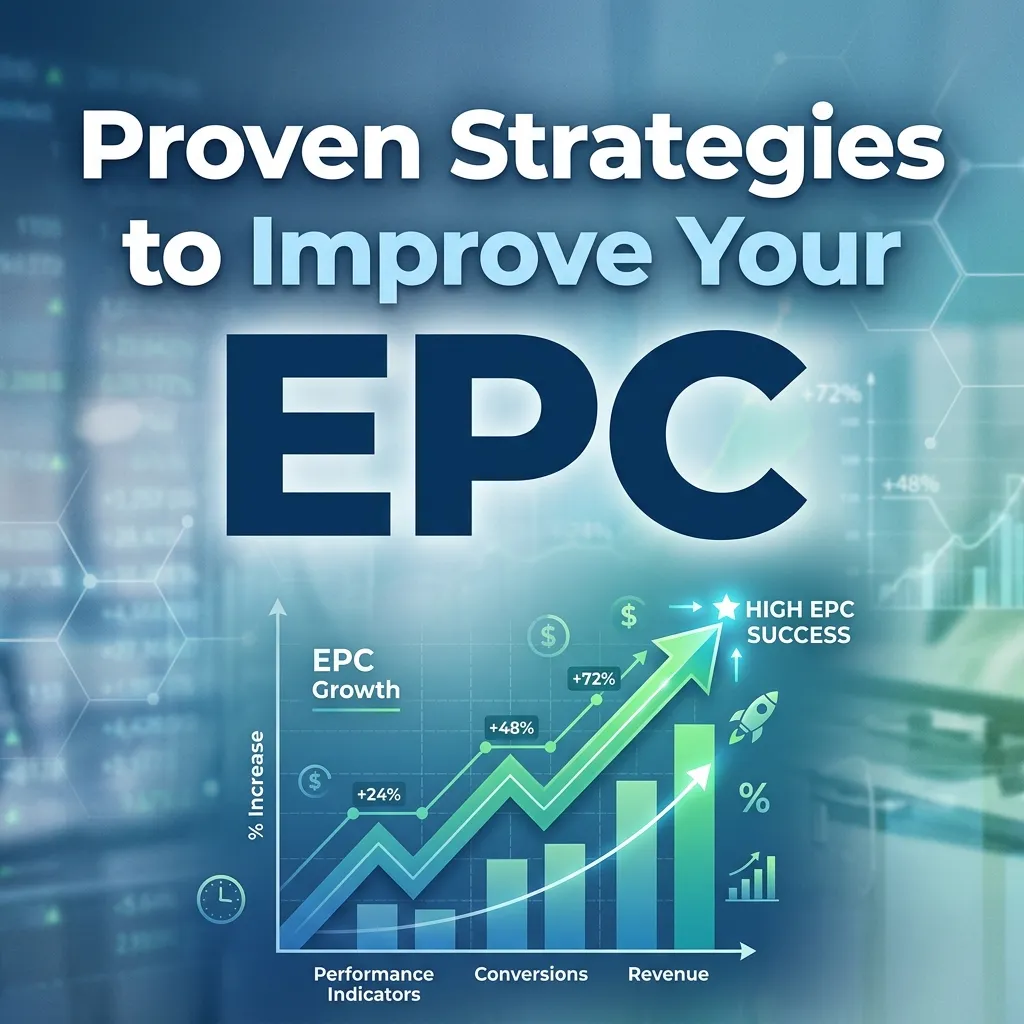
Now that you have an in-depth understanding of what is EPC in CPA marketing, the next logical step is learning how to increase it. Improving your EPC means you are extracting more revenue from the same amount of traffic. Let’s look at step-by-step, actionable methods for better performance.
1. Laser-Target Your Audience
The fastest way to boost your EPC is to improve the quality of your traffic—a fundamental aspect of what is EPC in CPA marketing. Sending broad, untargeted traffic to a CPA offer will result in lots of clicks but very few conversions, which tanks your EPC. Use advanced demographic targeting, search intent analysis, and behavioral data to ensure your ads are only shown to users who are highly likely to convert.
Pinpointing high-intent traffic is where many marketers see dramatic differences in what is EPC in CPA marketing results. The more relevant your audience, the higher the conversion rates, and, by extension, the higher your EPC.
2. Utilize Pre-Sell Landing Pages
Sending traffic directly to a merchant’s offer page often yields poor results. Instead, build a “pre-sell” or “bridge” page. This page should educate the user, build trust, and highlight the benefits of the CPA offer. By “warming up” the traffic before they click your affiliate link, you dramatically increase the conversion rate on the merchant’s site, thus elevating your EPC.
Optimizing your funnel by leveraging this strategy is one of the most reliable techniques for generating a competitive edge regarding what is EPC in CPA marketing, especially in crowded niches.
3. A/B Test Your Creatives and Angles
Never settle for your first campaign setup. Continuously split-test your ad headlines, images, call-to-action buttons, and landing page copy. Small tweaks in your messaging can lead to significant increases in conversion rates. When conversions go up while clicks remain steady, your EPC naturally rises.
Testing creative variables is a practical, ongoing answer to improving what is EPC in CPA marketing outcomes—you’ll consistently find incremental boosts this way.
4. Negotiate Higher Payouts
If you are driving high-quality traffic and generating consistent conversions, reach out to your affiliate manager. CPA networks are often willing to increase your payout per action if you have proven your value. A bump in your base CPA payout instantly increases your EPC without requiring any changes to your conversion rate.
Negotiation is sometimes overlooked in discussions about what is EPC in CPA marketing, but securing even a modest increase in payouts can dramatically impact your overall results.
5. Focus on Content Optimization and Trust Signals
Adding credibility to your pre-sell pages by including testimonials, case studies, and trust badges increases conversion rates. The relationship of trust directly impacts both the user experience and what is EPC in CPA marketing campaigns, since more conversions per click means higher EPC.
6. Optimize Traffic Sources
Regularly review the performance of each traffic source and prune underperformers. Traffic from platforms like Google Ads or high-authority blogs often leads to better EPC than untargeted banner exchanges or questionable ad networks.
By refining your list of sources, you hone in on what is EPC in CPA marketing—maximizing gains from every click driven.
Common Mistakes to Avoid in CPA Marketing
When learning what is EPC in CPA marketing, beginners often stumble into a few predictable traps. Avoid these pitfalls to protect your margins and ensure the foundation of your strategy remains strong:
- Chasing the Highest Payouts blindly: A $100 CPA payout looks great, but if the conversion rate is 0.01%, your EPC will be terrible. An offer paying $5 with a 10% conversion rate will make you much more money.
- Ignoring Traffic Quality: Buying dirt-cheap traffic from shady networks will inflate your click count and destroy your EPC. Focus on high-intent traffic sources like Google Search or targeted social media ads.
- Failing to Track Properly: If you aren’t using a reliable third-party tracker, you are flying blind. You need granular data to see exactly which keywords, placements, and ads are generating positive EPC.
- Giving Up Too Early: CPA campaigns require optimization. Your initial EPC will almost always be negative. You must gather data, cut the losing placements, and scale the winners to achieve profitability.
- Neglecting to monitor landing page performance: A slow, untrustworthy landing page will decimate your EPC, undermining all your other hard work in CPA marketing.
Learning what is EPC in CPA marketing means being vigilant—not only with the basics but also with your ongoing campaign tests and optimizations.
Pro Tips and Expert Insights
To dominate in the CPA marketing space, you need to think like a veteran media buyer. Here are a few advanced insights regarding what is EPC in CPA marketing:
- Focus on eEPC (Effective EPC): Some networks calculate EPC based on 100 clicks rather than a single click. Always check the network’s documentation so you are comparing apples to apples in your analyses of what is EPC in CPA marketing.
- Monitor Device Performance: EPC can vary wildly between desktop and mobile users. Segment your campaigns by device type. You might find that an offer has a fantastic EPC on iOS but performs terribly on Android.
- Leverage Retargeting: Users rarely convert on their first click. Implement tracking pixels and run retargeting campaigns to bring users back to your pre-sell pages. Retargeting traffic typically has a vastly superior EPC compared to cold traffic.
- Stay Compliant: High EPC means nothing if the network bans you for using deceptive marketing tactics. Always adhere to the traffic restrictions listed in the CPA offer details.
- Analyze Seasonal Trends: Some CPA offers have peak seasons when what is EPC in CPA marketing for those campaigns will naturally rise. Plan your biggest spend for those windows.
Developing an expert-level understanding of what is EPC in CPA marketing gives you a powerful lens for campaign planning, optimization, competitive research, and scaling.
The Role of Internal and External Linking
Building a sustainable affiliate business goes beyond just buying ads; it involves creating authoritative content that ranks well organically. This is where strategic linking comes into play, and its relevance to what is EPC in CPA marketing cannot be understated.
By naturally integrating Internal Linking to your other guides—like a post on high-converting landing pages, SEO for affiliate marketers, or using advanced tracking tools—you not only provide value but also help Google recognize your content’s topical depth and relevance. This increases overall authority around what is EPC in CPA marketing in your niche.
Offering External Linking to trusted sources, such as Voluum for tracking, Google Analytics, or industry-defining affiliate marketing resources, signals your research is comprehensive. Linking out strategically will improve user trust, enhance clarity around what is EPC in CPA marketing, and allow readers to dive deeper into specialized areas.
Remember to also use diversified anchor text while interlinking—using variations like optimize EPC, CPA campaign tracking, and affiliate payout analysis—to create a powerful SEO cluster.
Conclusion
Understanding what is EPC in CPA marketing is essential for anyone looking to maximize the profitability and scalability of their affiliate and performance campaigns. This metric distills complex data into a clear figure, allowing you to compare offers, streamline reporting, and optimize your campaigns based on real revenue—not guesswork.
By prioritizing traffic quality, optimizing your pre-sell pages for trust and conversion, testing creatives diligently, and negotiating higher payouts, you directly influence your EPC and overall bottom line. Remember to leverage smart internal linking for additional value and reference reliable external sources to demonstrate authority.
Now is the time to put the principles of what is EPC in CPA marketing into action. Start tracking your earnings per click, analyze your unique data, avoid common pitfalls, and ruthlessly optimize every aspect of your campaign. Harnessing the power of EPC will let you outcompete your peers, scale profitably, and build a performance marketing strategy that endures. Don’t just measure—master your EPC, and transform every click into sustained success.
FAQs
1. What is the difference between EPC and CPC?
EPC (Earnings Per Click) measures how much revenue you generate on average for each click on your affiliate link. CPC (Cost Per Click) is the amount you pay the advertising network to generate that click. Your goal is always to keep your EPC higher than your CPC.
2. How do I calculate EPC?
You calculate EPC by dividing your total affiliate earnings by the total number of clicks your affiliate link received. For example, $500 in earnings divided by 250 clicks equals an EPC of $2.00.
3. What is a good EPC in CPA marketing?
There is no universal “good” EPC because it depends entirely on your traffic costs. A “good” EPC is simply one that is higher than your Cost Per Click (CPC), leaving you with a positive Return on Investment (ROI). Understanding what is EPC in CPA marketing is crucial for benchmarking your results.
4. Why is my personal EPC lower than the network EPC?
The network EPC is an average of all affiliates promoting the offer. If your personal EPC is lower, it usually indicates that your traffic is less targeted, your landing page is underperforming, or your ad creatives are misleading users about the offer.
5. Can I improve my EPC without increasing my conversion rate?
Yes. You can improve your EPC by negotiating a higher payout (CPA) with your affiliate manager. If you get paid more for the same number of conversions, your Earnings Per Click will mathematically increase. This is a practical tactic in boosting what is EPC in CPA marketing outcomes.
6. Does EPC apply to organic traffic as well?
Absolutely. While EPC is heavily used by media buyers running paid ads, it is equally important for SEOs and bloggers. Knowing the EPC of your organic traffic helps you understand the monetary value of your search rankings.
7. Should I only promote offers with the highest Network EPC?
Not necessarily. Offers with a very high Network EPC are often highly competitive. Sometimes, promoting an obscure offer with a moderate EPC can be more profitable because you face less competition for ad placements and keywords. This is a common nuance in what is EPC in CPA marketing practice.
8. How often should I check my EPC?
When launching a new campaign, you should monitor your EPC daily to ensure you aren’t bleeding money. Once a campaign is optimized and stable, checking it a few times a week is usually sufficient.
9. Why do some networks show EPC based on 100 clicks?
Some networks display EPC as “Earnings per 100 Clicks” (sometimes labeled as eEPC) because it makes small numbers easier to read. For example, an EPC of $0.05 per click might be displayed as $5.00 per 100 clicks.
10. What role does traffic intent play in EPC?
Traffic intent is the biggest driver of EPC. Users actively searching for a solution (high intent) are far more likely to complete a CPA action than users casually scrolling social media (low intent). Higher intent directly translates to a higher conversion rate and, consequently, a higher EPC. This deep understanding is at the heart of what is EPC in CPA marketing for affiliate success.