
This comprehensive guide breaks down what is CPA online marketing, detailing how it connects affiliates with advertisers. You will learn proven traffic strategies, discover top networks, and gain actionable insights to launch a successful cost-per-action business while avoiding costly beginner mistakes.
Want to build a profitable digital business? If you are asking what is CPA online marketing, you are about to discover a highly lucrative, low-risk revenue model.
Understanding What Is CPA Online Marketing
To truly grasp what is CPA online marketing, you must look at the foundation of digital advertising. CPA stands for Cost Per Action, sometimes referred to as Cost Per Acquisition. It is a performance-based affiliate marketing model where a publisher (or affiliate) earns a commission only when a user takes a specific, predefined action.
Unlike traditional advertising, where you pay for mere impressions or clicks, CPA online marketing ensures that advertisers only part with their money when a real business result occurs. This action could be a completed sale, a submitted email form, a software download, or even a simple newsletter sign-up. By aligning the incentives of both the creator and the brand, this ecosystem has become one of the most efficient ways to drive revenue online.
When you ask what is CPA online marketing, you are essentially exploring a low-risk, high-reward system. Advertisers love it because they do not waste ad spend on empty traffic. Affiliates love it because high-converting offers can generate massive profits without the hassle of creating products, handling customer service, or managing inventory.
How Does CPA Marketing Work? The Core Ecosystem
To build a successful campaign, you must understand the three primary pillars that make up this ecosystem. When explaining what is CPA online marketing to a beginner, breaking down these roles is essential.
The Affiliate (Publisher)
The affiliate is the marketer who drives traffic to a specific offer. As an affiliate, your job is to find an audience, capture their attention, and persuade them to take the desired action. You might achieve this through a popular blog, an engaged social media following, or highly targeted paid advertising campaigns. You are the bridge between the product and the consumer. If you master affiliate marketing strategies, your earning potential becomes virtually limitless.
The Business (Advertiser)
The advertiser is the brand or company that needs more customers, leads, or users. They have a product or service but need help reaching a wider audience. Instead of spending thousands of dollars on unpredictable advertising, they create a CPA offer. They define the exact action they want the user to take and set a fixed payout for every time an affiliate successfully drives that action.
The CPA Network
The network acts as the middleman between the affiliate and the advertiser. Finding reliable partners can be difficult, so networks provide a centralized platform where advertisers list their offers and affiliates find products to promote. The network handles the tracking links, monitors conversions, ensures compliance, and processes your payments. They are the administrative backbone of the entire operation.
The Different Types of CPA Marketing Models
When you dive deeper into what is CPA online marketing, you quickly realize that “action” is a broad term. Here are the most common models you will encounter:
Pay Per Sale (PPS)
In the Pay Per Sale model, you earn a commission when the user actually purchases a product. This is common in e-commerce and software sales. The barrier to entry is higher because convincing someone to spend money takes more effort, but the payouts are significantly larger.
Pay Per Lead (PPL)
This model pays you when a user provides their contact information. They might fill out a form for a free quote, sign up for a trial, or subscribe to a mailing list. Because the user does not have to pull out their credit card, conversion rates are usually much higher.
Pay Per Install (PPI)
Mobile apps and software companies frequently use the Pay Per Install model. You receive a commission every time a user downloads and opens an application. This is incredibly popular in the gaming and utility software niches.
Recurring Commissions
Some programs offer recurring payouts. If you refer a customer to a subscription-based service, you earn a percentage of their monthly fee for as long as they remain a customer. This is the holy grail for building passive, predictable income.
CPA vs. Other Digital Marketing Models
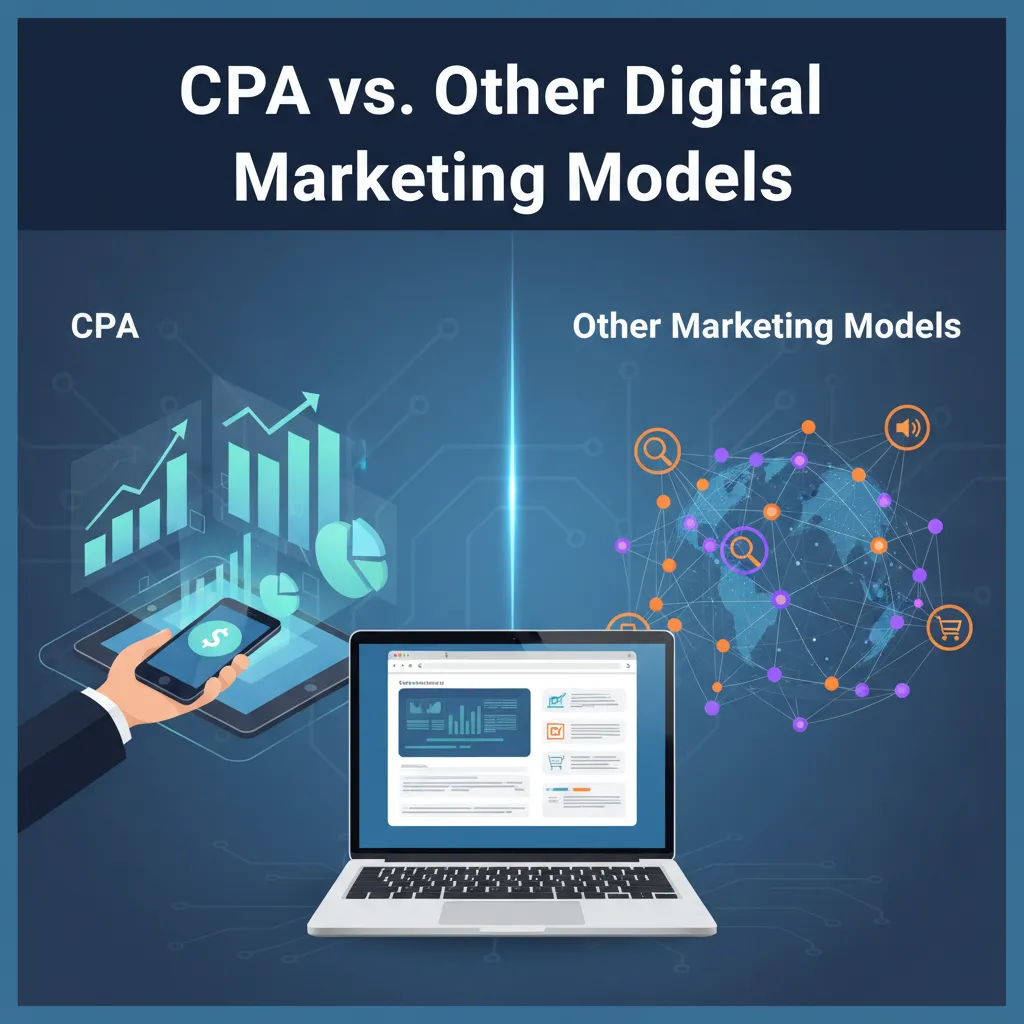
To fully answer what is CPA online marketing, we must compare it to other popular advertising methods. Here is a clear breakdown:
|
Marketing Model |
What It Stands For |
How It Works |
Best Used For |
|---|---|---|---|
|
CPA |
Cost Per Action |
Payment is issued only when a specific action (sale, lead) is completed. |
Guaranteeing ROI and generating tangible leads. |
|
CPC |
Cost Per Click |
Payment is issued every time a user clicks on an ad, regardless of conversion. |
Driving high volumes of initial traffic to a site. |
|
CPM |
Cost Per Mille (Thousand) |
Payment is issued for every 1,000 views or impressions of an advertisement. |
Broad brand awareness campaigns. |
As you can see, the CPA model minimizes risk for the advertiser while maximizing the reward for highly skilled marketers.
Step-by-Step Guide: How to Start Your CPA Marketing Journey
If you are ready to launch your first campaign, follow these proven steps to establish a strong foundation.
Step 1: Choose Your Niche
Do not try to sell everything to everyone. Select a specific niche that you understand or are eager to learn about. Profitable niches include personal finance, health and wellness, gaming, and software. Focusing on one area allows you to understand your audience’s pain points deeply.
Step 2: Join a Reputable Network
Apply to reliable networks to access high-quality offers. Networks look for marketers who treat this as a real business. Be honest about your experience level and explain exactly how you plan to drive traffic. Popular networks include MaxBounty, Perform[cb], and ClickDealer.
Step 3: Select the Right Offer
Once accepted, browse the available offers. Look for products with high conversion rates and solid earnings per click (EPC). Do not just chase the highest payout. A $2 payout that converts at 10% will make you far more money than a $50 payout that converts at 0.1%.
Step 4: Build Your Assets
Never send traffic directly to an affiliate link. Build a bridge page or a landing page to pre-frame the offer. Implementing solid landing page best practices will warm up your audience, making them much more likely to convert once they reach the advertiser’s site.
Step 5: Drive Targeted Traffic
You must get eyeballs on your landing page. You can use search engine optimization (SEO) to attract organic visitors, or you can purchase ads on platforms like Google or Facebook.
Step 6: Test and Optimize
Your first campaign will rarely be profitable on day one. You must track your data, analyze user behavior, and tweak your headlines, images, and targeting. Conversion rate optimization is the secret weapon of every successful affiliate marketer.
Best Traffic Sources for CPA Campaigns
Understanding what is CPA online marketing is only half the battle; you must master traffic generation to succeed.
Search Engine Optimization (Organic)
Building a niche website and ranking articles on Google is highly profitable. When users search for specific solutions, they show high intent. If your article provides the answer and links to a relevant CPA offer, conversions happen naturally. While SEO takes time, the traffic is free and consistent.
Paid Search Advertising
Platforms like Google Ads allow you to bid on specific search terms. If someone searches for “best auto insurance quotes,” you can place your ad at the top of the page. You pay for the click, but if your CPA offer pays out more than your ad spend, you turn a profit immediately.
Social Media Advertising
Facebook, Instagram, and TikTok offer incredibly granular targeting options. You can show ads to specific demographics, interests, and behaviors. This is perfect for impulse-buy products or highly engaging mobile app installs.
Email Marketing
Building a subscriber list gives you complete control over your audience. You can send targeted promotions directly to their inbox without worrying about algorithm changes. Mastering email marketing funnels allows you to promote multiple offers to the same audience over time, maximizing your lifetime customer value.
Common Mistakes to Avoid in CPA Marketing
Many beginners fail because they fall into predictable traps. Avoid these costly errors to protect your business.
- Ignoring the Offer Restrictions: Every CPA offer comes with strict rules regarding allowed traffic sources. If an offer forbids email traffic and you send an email blast, the network will void your commissions and likely ban your account.
- Direct Linking: Sending users directly from an ad to an affiliate link rarely works. Users need context. Always use a presell page or a landing page to build trust.
- Failing to Track Data: If you do not use tracking software, you are flying blind. You must know exactly which keyword, ad creative, or demographic generated the conversion so you can scale what works and cut what does not.
- Spreading Yourself Too Thin: Do not run twenty different campaigns on five different traffic sources at once. Pick one offer, one traffic source, and focus entirely on making it profitable before moving on to the next.
Expert Insights and Pro Tips for Scaling
Once you have a profitable campaign, your goal is to scale it. Here are advanced strategies used by top-tier marketers.
Build Relationships with Affiliate Managers
Your affiliate manager is your best friend in this industry. They have access to data you do not see. They know which offers are currently converting the best across the entire network. Build a strong relationship with them, ask for recommendations, and negotiate higher payouts once you prove you can deliver quality traffic.
A/B Test Everything
Never assume you know what the audience wants. Test two different headlines against each other. Test a green button versus a red button. Small tweaks to your landing page can double your conversion rate without spending an extra dime on traffic.
Focus on Mobile Traffic
The vast majority of web traffic now comes from mobile devices. Ensure your landing pages load instantly on smartphones and that your content is easy to read on small screens. Many CPA offers are designed specifically for mobile users, such as app installs or carrier billing subscriptions.
Leverage High-Authority Platforms
You do not always have to build a website from scratch. You can leverage the authority of established platforms. You can write insightful answers on forums or publish articles on major publishing platforms. Linking back to your offers from these trusted sites can provide an excellent boost in traffic. Check out resources like Shopify’s guide to marketing or BigCommerce’s affiliate insights to see how massive brands leverage these strategies.
Maintaining Compliance and Quality
Networks and advertisers prioritize quality above all else. They monitor the leads you send closely. If you send fraudulent leads, use deceptive advertising, or utilize bot traffic, you will face immediate termination. Always maintain transparency. Ensure your ads match the actual offer you are promoting. Building a sustainable business requires honesty and a focus on providing genuine value to the end user. If you want to understand broader advertising compliance, reviewing Google Ads policies is an excellent starting point.
The Future of Cost Per Action Advertising
As the digital landscape evolves, so does the nature of performance marketing. We are seeing a massive shift toward video content and influencer-driven campaigns. Brands prefer CPA models over traditional ads because the return on investment is guaranteed. This means the opportunities for skilled affiliates will only continue to grow. By mastering the fundamentals today, you position yourself perfectly for the innovations of tomorrow.
Remember, figuring out what CPA online marketing is just the beginning. The real magic happens when you take consistent, daily action to refine your skills, test new ideas, and build your digital assets.
In conclusion, understanding what is CPA online marketing opens the door to unparalleled digital revenue. By choosing the right niche, partnering with top networks, and driving targeted traffic, you can build a highly profitable business. Stop waiting on the sidelines—launch your first campaign today, optimize your funnel, and watch your commissions grow.
FAQs
What is CPA online marketing in simple terms?
It is a digital advertising model where a business pays a marketer a flat fee only when a specific action is completed, such as making a sale or capturing a lead.
How do I get accepted into a CPA network?
Be honest on your application, have a clear plan for generating traffic, provide a professional website if possible, and communicate clearly during the interview process with the network manager.
Do I need a website to start?
While having a website is highly recommended for building landing pages and establishing authority, you can start without one by using social media channels, email marketing, or standalone funnel builders.
What is the difference between CPA and affiliate marketing?
CPA is a specific subset of affiliate marketing. Traditional affiliate marketing usually focuses strictly on generating sales, whereas CPA includes getting paid for smaller actions like leads, forms, and app installs.
How much money can I make?
Your earning potential is unlimited. Beginners might make a few hundred dollars a month, while advanced marketers who scale their paid advertising campaigns can generate tens of thousands of dollars daily.
Are there any free ways to get traffic?
Yes, organic methods like search engine optimization (SEO), posting engaging content on social media, participating in forums, and building a YouTube channel can drive high-quality, free traffic to your offers.
What is a landing page and why do I need one
A landing page is a single web page designed specifically to persuade a visitor to take an action. You need it because sending traffic directly to an affiliate link lowers trust and decreases your overall conversion rate.
What happens if I break the network’s rules?
If you violate traffic restrictions, use fraudulent methods, or spam users, the network will permanently ban your account, and you will forfeit any unpaid commissions you have generated.
How do I know which offer is the best to promote?
Look at the Earnings Per Click (EPC) metric provided by the network. A high EPC indicates that other affiliates are successfully converting traffic with that specific offer. Also, consult your affiliate manager for guidance.
How often do networks pay their affiliates?
Payment schedules vary by network. Many start on a Net-30 basis (paying 30 days after the end of the month), but as you prove your reliability and generate consistent volume, you can often negotiate weekly or even daily payouts.