
This comprehensive guide breaks down the core concepts behind cost per action advertising. You will learn how the ecosystem functions, discover strategies to lower your acquisition costs, and explore actionable techniques to generate higher returns from your digital advertising campaigns.
If you want to maximize your advertising budget, understanding the CPA meaning marketing professionals use is essential. This guide explains how performance-based advertising transforms passive clicks into guaranteed, measurable customer actions.
Understanding the CPA Meaning Marketing Landscape
When you dive into digital advertising, you encounter a massive alphabet soup of acronyms. Among these, the CPA meaning marketing experts focus on stands for Cost Per Action or Cost Per Acquisition. Unlike traditional advertising models where you pay simply to have your ad seen or clicked, cost per action is a purely performance-based model. You only open your wallet when a user completes a specific, predetermined action.
This fundamental shift in how we pay for marketing changes the entire dynamic of digital advertising. Instead of hoping that impressions turn into revenue, you guarantee that you only pay for tangible results. These results can vary wildly depending on your business goals. For an e-commerce brand, the action might be a completed sale. For a software company, it might be a free trial signup. For a local service business, it could be a submitted lead form or a booked consultation.
By tying your advertising spend directly to concrete business outcomes, you eliminate the guesswork from your marketing budget. This is why understanding the CPA meaning marketing approach is critical for anyone looking to scale a business profitably. You shift the risk from the advertiser to the publisher or affiliate, ensuring that your marketing dollars only go toward actual growth.
The Ecosystem: How CPA Marketing Works in Practice
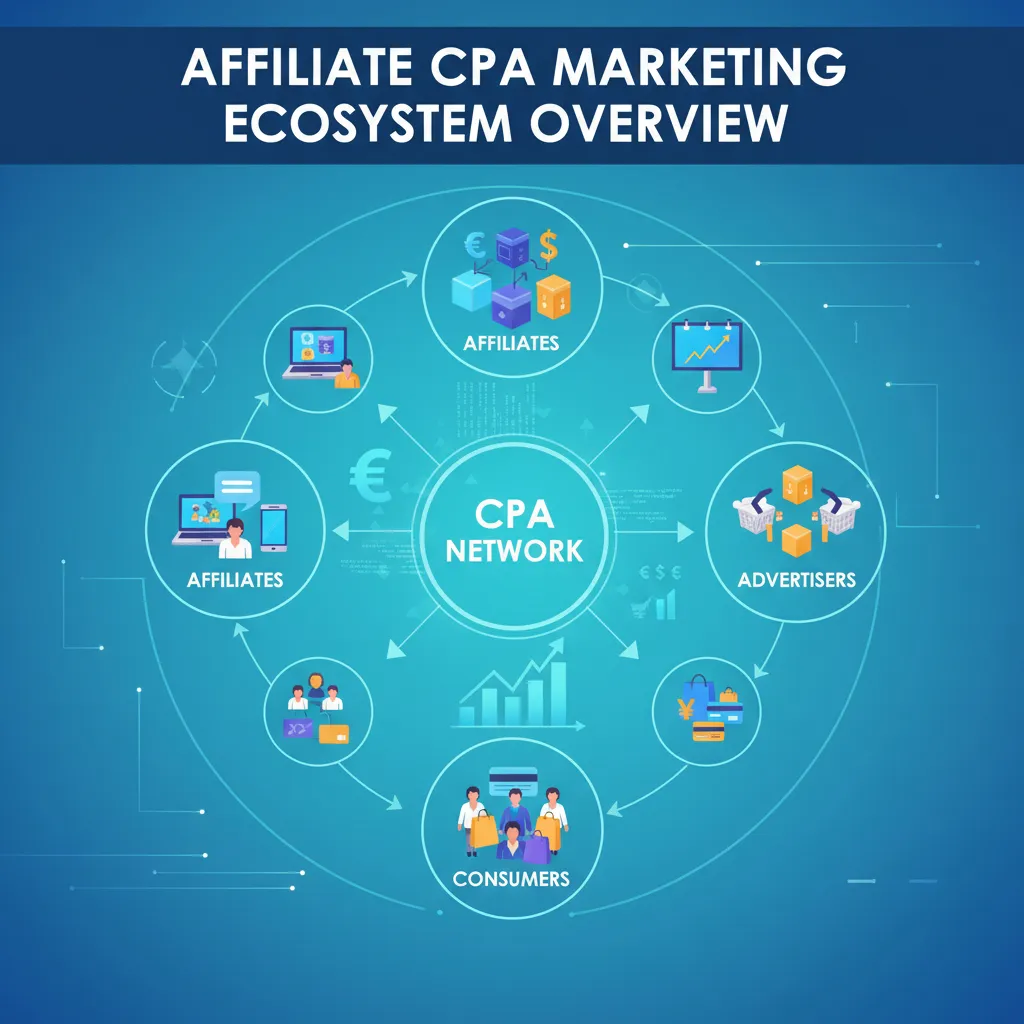
To fully grasp how this performance model functions, you need to understand the three primary players involved in the ecosystem. Each party brings something unique to the table, and they all must work together seamlessly to generate profitable outcomes.
The Advertiser
The advertiser is the business or brand that wants to generate more leads, sales, or signups. As the advertiser, you determine what action holds value for your business and how much you are willing to pay for that action. You provide the creative assets, the landing pages, and the final product or service. Your primary goal is to acquire customers at a cost lower than their lifetime value, allowing you to scale your operations profitably.
The Affiliate or Publisher
The affiliate is the marketing partner who promotes the advertiser’s offer. This could be a blogger, a social media influencer, an email list owner, or a media buyer who runs paid search campaigns. The affiliate leverages their audience or their expertise in driving traffic to generate the desired actions for the advertiser. Because they only get paid when an action occurs, they are highly motivated to send high-quality, targeted traffic to the advertiser’s landing page. If you are looking to improve your overall strategy, optimizing your digital marketing strategy is a great place to start.
The CPA Network
The network acts as the middleman between the advertiser and the affiliate. Networks provide the tracking technology, manage the payments, and offer a centralized marketplace where affiliates can find offers to promote. They ensure that every click, lead, and sale is accurately tracked and attributed to the correct affiliate. Reputable networks also provide fraud prevention tools to ensure that advertisers only pay for legitimate actions.
Common Cost Per Action Triggers
The versatility of this marketing model lies in its ability to adapt to almost any business objective. Here are some of the most common actions that advertisers pay for:
Lead Generation: You pay when a user submits their contact information, such as an email address or phone number. This is incredibly common in industries like insurance, finance, and home services.
App Installs: Mobile game developers and software companies frequently pay affiliates every time a user downloads and installs their application.
Purchases: E-commerce brands often pay a flat fee or a percentage of the sale when an affiliate drives a completed transaction. If you want to boost these numbers, focusing on conversion rate optimization is vital.
Trial Signups: Subscription-based businesses often pay for every user who registers for a free trial, knowing that a certain percentage will eventually convert into paying customers.
CPA vs. CPC vs. CPM: A Detailed Comparison
To truly appreciate the CPA meaning marketing professionals discuss, you need to compare it to the other dominant pricing models in digital advertising. Understanding these differences helps you allocate your budget more effectively.
|
Metric |
What It Stands For |
When You Pay |
Best Used For |
Risk Level for Advertiser |
|---|---|---|---|---|
|
CPM |
Cost Per Mille (Thousand) |
Every 1,000 times your ad is shown |
Brand awareness, reaching a massive audience |
High |
|
CPC |
Cost Per Click |
Every time someone clicks your ad |
Driving traffic to a website, building retargeting lists |
Medium |
|
CPA |
Cost Per Action |
Only when a specific conversion occurs |
Generating leads, driving direct sales, and acquiring users |
Low |
When you buy CPM traffic, you pay for eyeballs. If your ad creative is poor or your targeting is off, you can spend a significant amount of money without generating a single lead. CPC offers slightly more security, as you only pay for people who show enough interest to click. However, a click does not guarantee a customer. If your landing page fails to convert, you still lose money on those clicks.
Cost per action mitigates this risk almost entirely. Because you only pay for the final conversion, the publisher bears the burden of optimizing the ad creative and targeting the right audience. If they send 10,000 visitors to your site and no one buys, you pay nothing.
Why This Marketing Model Matters for Your Business
Adopting a performance-based approach provides several distinct advantages that can dramatically alter your business’s trajectory.
Lower Risk and Predictable ROI
The most obvious benefit is the reduction in financial risk. Startups and small businesses often operate with tight budgets and cannot afford to run experimental brand awareness campaigns that may or may not generate revenue. By paying only for results, you ensure that your marketing budget directly translates into business growth. You can calculate your exact return on investment before you even launch the campaign. If you know a customer is worth $100 to your business, and you pay an affiliate $30 to acquire them, you guarantee a $70 gross profit on every transaction.
Access to Uncharted Audiences
When you work with a diverse network of affiliates, you gain access to audiences you might never reach through your own marketing efforts. An affiliate might have a highly engaged email list in a specific niche, or they might possess advanced skills in native advertising. By leveraging their expertise and reach, you can rapidly scale your customer acquisition efforts without having to build those channels from scratch internally. Expanding your affiliate marketing networks can unlock massive growth potential.
Better Budget Allocation
When you know exactly how much it costs to acquire a customer, budgeting becomes a straightforward mathematical exercise. You do not have to guess how much you should allocate to social media versus search engines. You simply set an unlimited budget for any channel or affiliate that can deliver customers at or below your target cost per action. This allows you to scale winning campaigns infinitely while instantly cutting off channels that fail to perform.
Pro Tips and Expert Insights for Campaign Success
Succeeding with this marketing model requires more than simply launching an offer on a network. You must actively manage your campaigns and build strong relationships with your partners.
Understand Your Customer Lifetime Value: Before you set your payout rates, you must calculate exactly how much a customer is worth to your business over their entire lifespan. If you only look at the initial transaction size, you might set your payouts too low and fail to attract top-tier affiliates.
Optimize Your Landing Pages Constantly: Affiliates will only promote your offer if it converts well. If your landing page is confusing or slow, affiliates will stop sending traffic. Test your headlines, improve your page load speed, and streamline your checkout process to maximize the conversion rate. Google Analytics offers robust tools for tracking this user behavior.
Communicate with Your Top Performers: The Pareto principle heavily applies here. A small percentage of your affiliates will likely generate the vast majority of your results. Treat these top performers like true business partners. Ask them what they need to succeed, provide them with exclusive creative assets, and consider offering them higher payouts to incentivize more volume.
Common Mistakes to Avoid
Even experienced marketers make critical errors when launching performance campaigns. Avoid these common pitfalls to protect your budget and your brand reputation.
Ignoring Fraud Prevention: The unfortunate reality of paying for actions is that bad actors will attempt to fake those actions. If you pay for lead form submissions, bots can easily fill out those forms with fake information. Work exclusively with reputable networks that utilize advanced fraud detection software, and regularly audit the quality of the leads you receive.
Setting Payouts Too Low: It is tempting to offer the lowest payout possible to maximize your profit margin. However, affiliates are rational business people. If a competing brand offers a higher payout for a similar product, affiliates will promote your competitor. Research the market rates in your industry and ensure your payouts are highly competitive.
Failing to Provide Creative Assets: Do not expect affiliates to create all the marketing materials from scratch. Provide them with a robust library of high-quality banners, email copy, product images, and video assets. The easier you make it for them to promote your offer, the more likely they are to do so. Improving your content creation strategy helps affiliates sell your product better.
Optimizing Your Strategy for Long-Term Growth

To build a sustainable performance marketing channel, you must continually refine your approach based on data and market feedback.
Start by defining crystal-clear conversion goals. Vague goals lead to vague results. Determine exactly what action drives the most value for your business and build your entire tracking infrastructure around that specific event. Implement reliable attribution models so you know exactly which affiliate drove which sale. Resources like Search Engine Land provide excellent guides on setting up accurate attribution tracking.
Test different audience segments and traffic sources. An offer that performs brilliantly on social media might fail on search engines. Encourage your affiliates to test various traffic sources, but monitor the quality of the customers generated from each source. You may find that customers acquired through email marketing have a significantly higher retention rate than those acquired through display ads.
Finally, leverage retargeting strategies to maximize your total conversion rate. A user might click an affiliate link, visit your site, and leave without completing the action. By implementing your own retargeting campaigns, you can bring those users back to complete the purchase, thereby increasing the overall conversion rate of your landing page and making your offer more attractive to affiliates.
Conclusion
Mastering the CPA meaning marketing definition changes how you approach digital advertising, shifting your focus from vanity metrics to guaranteed, profitable actions. By understanding the ecosystem, avoiding common pitfalls, and optimizing your campaigns based on hard data, you can scale your customer acquisition efforts with incredible precision. Start tracking your cost per action today and build a more resilient, profitable business.
FAQs
What is the CPA meaning marketing professionals use?
It stands for Cost Per Action or Cost Per Acquisition. It is a digital advertising model where advertisers pay publishers only when a specific, predetermined action is completed, such as a sale or a signup.
How is this different from CPC advertising?
CPC (Cost Per Click) requires you to pay every time a user clicks your ad, regardless of whether they buy anything. Cost per action means you only pay when the actual conversion happens, removing the risk of paying for non-converting traffic.
What actions can I track and pay for?
You can track almost any digital action. Common actions include e-commerce purchases, software trial signups, email newsletter subscriptions, mobile application downloads, and lead form submissions.
Is this model suitable for small businesses?
Yes, it is highly suitable for small businesses because it minimizes financial risk. Small businesses with tight budgets can guarantee that they only spend marketing dollars when they actually acquire a customer or a qualified lead.
How do affiliates get paid?
Affiliates use unique tracking links provided by a network. When a user clicks that link and completes the desired action on the advertiser’s website, the tracking software records the event, and the affiliate is credited with the predetermined commission.
What is a CPA network?
A network is a platform that connects advertisers with affiliates. The network handles the tracking technology, aggregates various offers, manages payouts, and often provides fraud prevention services.
How do I calculate a good target payout?
You must calculate your Customer Lifetime Value (LTV) and your profit margins. Your target payout should be significantly lower than the total profit you expect to make from that customer to ensure the campaign remains profitable.
What are the biggest risks in this type of marketing?
The biggest risk is affiliate fraud, where malicious actors use bots or stolen information to generate fake leads or sales. Partnering with reputable networks and strictly auditing your traffic quality mitigates this risk.
Why would an affiliate choose to promote my offer?
Affiliates promote offers that make them the most money. To attract them, you need a competitive payout rate, a highly optimized landing page that converts well, and excellent creative assets they can use in their marketing.
Can I use this model alongside my other marketing efforts?
Absolutely. Performance marketing works best as part of a diversified digital marketing strategy. It pairs exceptionally well with SEO, content marketing, and your own internal email marketing campaigns.