

In today’s digital landscape, CPA marketing funnel optimization has become an essential discipline for performance-driven marketers seeking to maximize return on investment. As campaigns grow more complex and competition intensifies, refining each element of the conversion pathway ensures that every advertising dollar delivers measurable results. This year (2026), brands and affiliates alike are focusing on data-driven techniques to reduce drop-off rates, improve lead quality, and scale cost-per-action programs with confidence. By adopting a systematic approach—testing landing pages, segmenting audiences, and leveraging advanced analytics—professionals can uncover hidden opportunities for boosting affiliate commissions and driving sustainable growth. In this comprehensive guide, you will discover proven strategies to attract high-intent visitors, craft persuasive landing pages, enhance conversion rates, and deploy smart retargeting tactics. Throughout the article, we’ll reference authoritative insights from institutions like the University of California and practical guidelines from the U.S. Small Business Administration to ensure that you have a robust, certified framework at your disposal. Whether you’re new to CPA marketing or an experienced affiliate manager, the techniques outlined here will empower you to optimize your funnel, lower your cost per action, and achieve reliable, scalable returns in 2026.
Understanding the Fundamentals of CPA Marketing Funnels
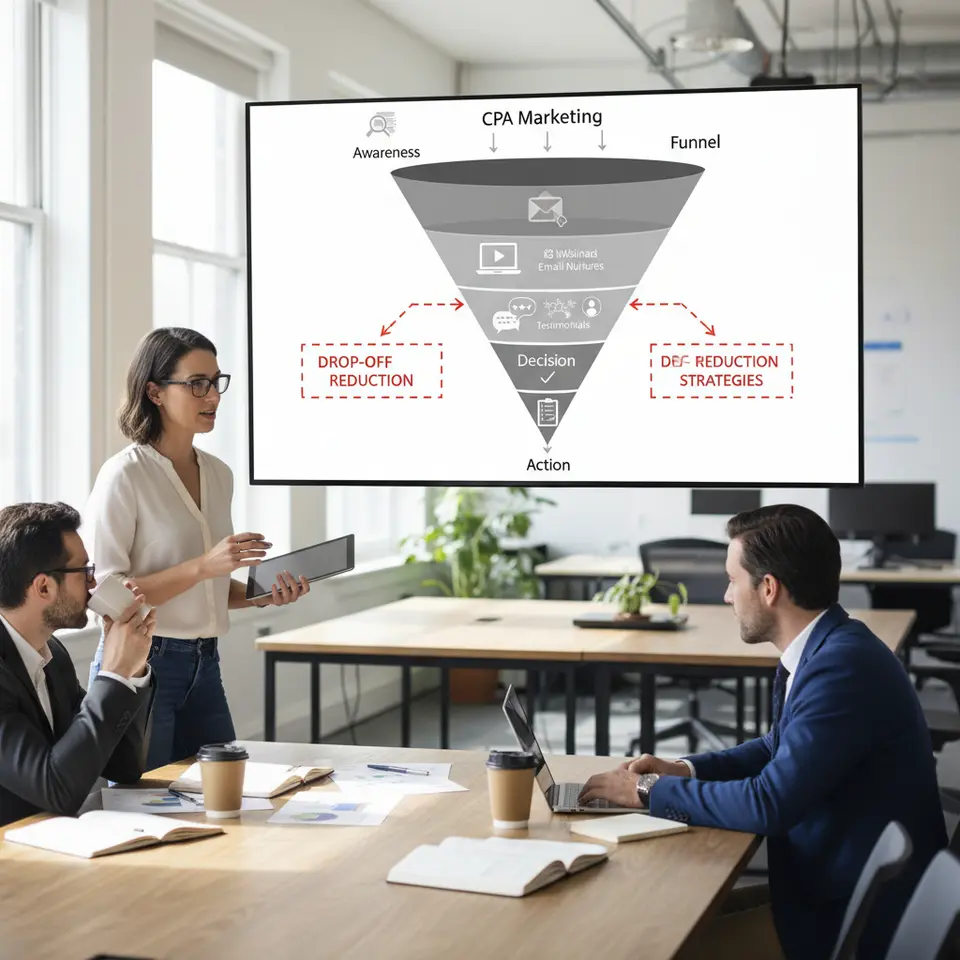
At its core, CPA marketing funnel optimization is about refining the journey that prospects take from initial awareness through to completing a specified action—whether that’s filling out a form, making a purchase, or downloading an app. In today’s environment, audiences expect a seamless experience at every touchpoint, so any friction can dramatically impact your conversion metrics. A well-structured funnel typically comprises four progressive stages: awareness, interest, decision, and action. Optimizing each phase allows you to minimize drop-off and deliver the right message to the right user at the right time.
During the awareness stage, you focus on capturing attention through targeted ad placements, content marketing, or strategic partnerships. The objective is to drive qualified traffic by leveraging demographic, psychographic, or behavioral data. Next, in the interest phase, your goal shifts to nurturing prospects with valuable information—case studies, webinars, or email series—that clarify the unique benefits of your offer. This sets the stage for the decision phase, where persuasive copy, social proof, and trust signals play a crucial role in tipping the balance in your favor. Finally, the action stage is where conversions occur. You should ensure your tracking pixels are properly configured and that users encounter a frictionless path to submission.
Experts in affiliate marketing emphasize the importance of iterative testing within this framework. By running split tests on headlines, form fields, and creatives, you can gather statistically significant insights before scaling budgets. Cohort analysis, for instance, can reveal which segments deliver the highest lifetime value, allowing you to reallocate ad spend for maximum efficiency. Institutions like the University of California recommend rigorous data collection and continuous performance audits to maintain optimal funnel health. With a clear understanding of each funnel stage and a commitment to ongoing refinement, CPA marketers can reduce cost per action and maximize their affiliate payouts.
Attracting the Right Audience and Driving Quality Traffic
One of the most critical elements of CPA marketing funnel optimization is ensuring that the traffic entering your funnel matches your ideal customer profile. High-volume traffic alone won’t guarantee success; instead, prioritize high-intent visitors who are more likely to complete the desired action. To achieve this, begin by segmenting your audience based on factors such as age, location, interests, and browsing behaviors. Advanced platforms like Facebook Ads and Google Ads enable granular targeting options, allowing you to serve customized messages to distinct cohorts.
Another effective strategy is to partner with niche influencers, bloggers, or complementary brands that share your target demographic. Collaborations can take the form of sponsored reviews, co-branded webinars, or joint giveaways—tactics that provide immediate credibility and drive engaged users to your landing pages. Native advertising networks and programmatic platforms also offer opportunities to reach audiences within relevant editorial contexts, giving your offer a more organic feel.
Leveraging Content Marketing and SEO
Content marketing remains one of the most cost-efficient ways to educate prospects and build trust before they encounter your offer. Publishing blog posts, whitepapers, or infographics on your owned channels and optimizing them for relevant long-tail keywords can boost organic traffic over time. For authoritative guidance, refer to research-backed recommendations from institutions like the Federal Trade Commission on compliant advertising practices. Harmonizing SEO efforts with paid campaigns increases your share of voice and amplifies top-of-funnel visibility.
Monitoring and Adjusting Targeting Parameters
Once your campaigns are live, it’s crucial to monitor key performance indicators (KPIs) such as click-through rate (CTR), cost per click (CPC), and initial engagement metrics. Use real-time dashboards in Google Analytics or Mixpanel to identify underperforming segments and reallocate budgets to channels that yield higher ROI. By continually refining your targeting parameters and creative assets, you ensure that only highly relevant users progress to subsequent funnel stages, reducing wasted ad spend and improving your overall CPA metric.
Designing and Optimizing High-Converting Landing Pages
Your landing page serves as the pivotal point where awareness transitions into meaningful engagement. To optimize this crucial touchpoint, focus on speed, clarity, and persuasive design. According to University of California research, a one-second delay in page load time can lead to a significant drop in conversions, making fast hosting and streamlined code indispensable. Ensure that your page loads instantly on both desktop and mobile devices and that the layout adapts to various screen sizes.
Crafting a Compelling Headline and Value Proposition
The headline is the first element visitors see, so it must encapsulate the core benefit of your offer in a concise, benefit-driven manner. Pair this with a subheading that addresses common objections or adds context. Your value proposition should be reinforced by bullet points summarizing the key advantages of taking action, whether it’s receiving a free trial, accessing exclusive content, or unlocking discounts.
Implementing Social Proof and Trust Signals
Adding testimonials, star ratings, or case study excerpts dramatically increases credibility. When possible, include quantifiable outcomes—such as “Over 5,000 business owners saved 20% on advertising costs”—to give prospects concrete evidence of success. You can also display trust badges from recognized organizations or payment providers to alleviate security concerns.
Running A/B Tests to Refine Elements
Continuous experimentation is essential for improving conversion rates. Tools like Optimizely or Google Optimize let you run split tests on headlines, button colors, form lengths, and page layouts. Test one variable at a time to ensure that any performance changes can be attributed to that specific adjustment. Over weeks of testing, even minor improvements—such as tweaking button copy from “Submit” to “Get My Free Guide”—can yield substantial uplifts in conversions.
Boosting Conversions and Engagement Through Testing and Personalization

As prospects move from interest to decision, personalization and dynamic content become powerful levers for CPA marketing funnel optimization. By delivering tailored messages, you can address individual pain points and cultivate a sense of relevance that encourages action. Dynamic content tools enable you to swap headlines, images, or offers based on user attributes such as past behavior, referrer source, or geographic location.
Utilizing Urgency and Scarcity Tactics
Limited-time promotions, countdown timers, and exclusive quotas inject urgency into your funnel. However, authenticity is key—if users sense a false scarcity tactic, trust erodes quickly. Instead, align your offers with genuine events or inventory constraints to preserve credibility.
Incorporating Exit-Intent Popups and Multi-Step Forms
Exit-intent overlays detect when a user is about to leave the page and present a targeted offer or lead magnet. When executed thoughtfully, these popups can recapture abandoning visitors without disrupting the on-page experience. Similarly, multi-step forms break up long questionnaires into bite-sized interactions, reducing anxiety and improving completion rates. Each step should reinforce progress—displaying progress bars or friendly prompts—to keep prospects engaged until the final submission.
Analyzing Behavioral Data for Ongoing Improvements
Heatmap tools like Hotjar or Crazy Egg reveal how users interact with your pages, highlighting areas of confusion or disengagement. Combine these insights with event-tracking in Google Analytics to build a granular understanding of drop-off points. By mapping user journeys and identifying friction hotspots, you can implement targeted adjustments—such as relocating a form above the fold or simplifying navigation—to steadily increase your conversion rate.
Advanced Retargeting Strategies and Essential Tools
Not all prospects convert on their first visit. Retargeting bridges the gap by serving customized ads or email sequences that remind users of your initial offer or introduce complementary products. In today’s omnichannel environment, integrating retargeting across display, social, and email channels ensures that your brand remains top of mind throughout the decision-making process.
Segmented Email Sequences and Drip Campaigns
After capturing an email address, deploy automated drip campaigns with progressive messaging. Begin with educational content to build trust, followed by case studies, user testimonials, and finally, a compelling call to action. Segment your list by engagement level—clickers, openers, and inactive subscribers—to tailor the frequency and tone of your communications.
Programmatic Advertising and Dynamic Product Ads
Programmatic platforms enable real-time bidding for user-specific retargeting across thousands of websites. Dynamic product ads automatically populate creatives with the exact item users viewed, creating a seamless bridge between browsing and purchasing. These tailored ads often yield significantly higher click-through and conversion rates compared to generic banners.
Monitoring ROI with Advanced Analytics
Ensure that all retargeting campaigns are tagged with proper tracking parameters to measure cost per action (CPA), return on ad spend (ROAS), and customer lifetime value (CLV). Cohort analysis helps you pinpoint which audience segments and creatives deliver the strongest long-term returns—allowing you to double down on top performers while pausing underachievers.
Frequently Asked Questions
What are the primary stages of a CPA marketing funnel?
The core stages include awareness, interest, decision, and action. Each phase requires tailored messaging and optimization to guide prospects smoothly toward conversion.
How can I reduce drop-off rates in my funnel?
Focus on seamless user experience—optimize page load speeds, simplify forms, and deploy iterative A/B testing to identify and resolve friction points.
Why is retargeting essential for CPA campaigns?
Retargeting keeps your brand top of mind, recapturing visitors who didn’t convert initially. By serving personalized ads or drip emails, you can lead them back to your offer when they’re ready to take action.
What analytics tools should I use for ongoing optimization?
Combine quantitative platforms like Google Analytics and Mixpanel with qualitative tools like Hotjar or Crazy Egg to gain a holistic view of user behavior and funnel performance.
Conclusion
CPA marketing funnel optimization is an ongoing cycle of testing, measurement, and refinement. By focusing on attracting qualified traffic, crafting persuasive landing pages, enhancing conversion mechanics, and deploying sophisticated retargeting strategies, marketers can significantly lower their cost per action and boost affiliate payouts. Leveraging authoritative insights from institutions like the University of California and guidance from the U.S. Small Business Administration ensures that your processes remain data-driven and compliant. As you implement these tactics in 2026, remember that continuous iteration is the key to sustainable success—small optimizations compounded over time will yield substantial results. Start by auditing your current funnel, identifying the biggest drop-off points, and applying one new technique today to supercharge your growth in this competitive landscape.